
Events
The Guild holds a range of events through the year at The Guild in London and on Zoom.


‘Mixed Race, Post Race’ 30 years on: Same Difference?
‘Mixed Race, Post Race’ 30 years on: Same Difference?
Suki Ali
Respondent: Sangita Mulji (Guild of Psychotherapists)
Chair: TBC (Guild of Psychotherapists)
This is the latest in the series of seminars on Decolonising Psychoanalysis, organised by the Race and Culture Committee of the Guild of Psychotherapists. The series is intended to open up conversations about psychoanalysis by initiating dialogues between academics and psychotherapists, bringing clinical responses to the academic decolonial work. In this seminar, professor of sociology Suki Ali looks again at her book ‘Mixed Race, Post Race: Gender, New Ethnicities and Cultural Practices’, and asks what this research can tell us about racial identity and racism today. In particular, what this means for those who live, claim or are assigned mixedness?
Please note that a recording of the seminar will be available to ticket-holders for a full year after the event.
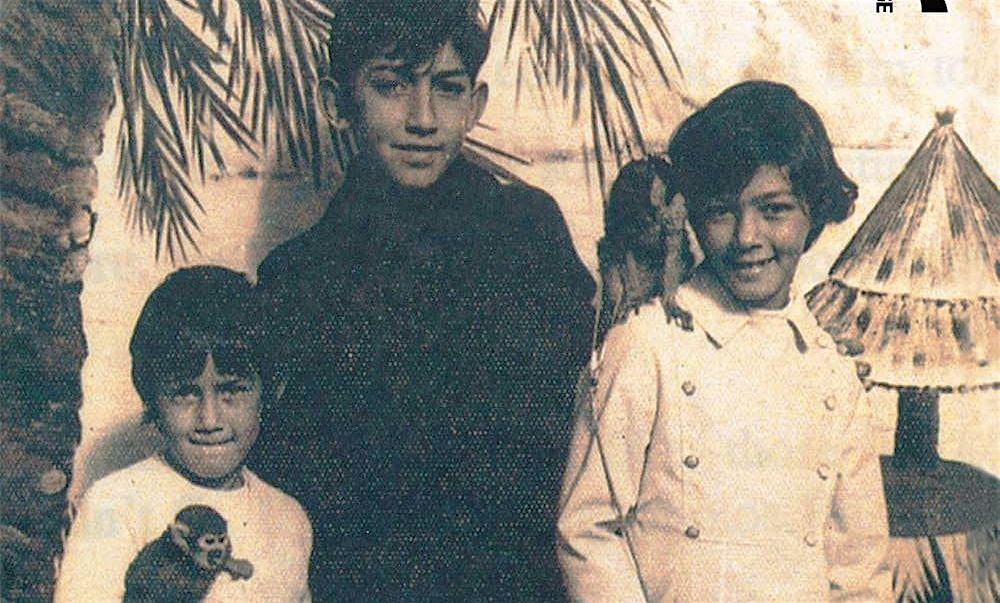
Image caption
From the cover of Mixed-Race, Post-Race: Gender, New Ethnicities and Cultural Practices (2003), showing Suki and her siblings, Nick and Lisa, in a photograph taken by a professional photographer (who had the monkeys) on the seafront at Hastings.
About this seminar
‘Mixed Race, Post Race’ 30 years on: Same Difference? Suki Ali
In the mid-1990s, the UK government began consultations on the development of a new ‘Mixed’ category for the 2001 Census of England and Wales. Until that point, those who identified as ‘mixed’ were required, when asked about their ethnic group, to tick ‘Other’. It was within this context that I began researching children’s understandings of race, racism and identity across educational and familial settings. Working with the limited cultural tools available to them, children developed creative ways of articulating their positionalities, drawing on resources from family life, school and popular culture. The research culminated in Mixed-Race, Post-Race: Gender, New Ethnicities and Cultural Practices (2003), which became a foundational text in the emerging field of Mixed Race Studies. Thirty years later, however, many of the central questions remain unresolved. Are we, or have we ever been, ‘post-race’? More importantly, should we want to be? How does colonial thinking continue to organise understandings of race, racism and belonging? And what does this mean for those who live, claim or are assigned mixedness? This paper revisits children’s accounts from that earlier research alongside my own autobiographical writing in order to ask what has changed, and what has stayed the same. I argue that, despite apparent shifts in the recognition and acceptance of mixedness, contemporary politics and lived experience continue to reveal the same patterns of entrenched racism and xenophobia. To understand the present conjuncture, we must attend not only to the queer potentials of mixedness, but also to the sexual and racial capitalism through which mixing, in all its forms, is imagined, (de)valued, regulated and contested.

Speakers’ Biographies
Suki Ali is an Emeritus Professor in the Department of Sociology at the LSE. She has been researching and writing on mixed race for over 30 years, and is the author of Mixed-Race, Post-Race: Gender, New Ethnicities and Cultural Practices (2003) Her main theoretical interests are in queer and feminist anti-colonial thinking, psychoanalytic theory, the politics of knowledge, visual culture, and identity and embodiment. Her current work includes research into the construction of ‘Voice’ in higher education. Recent publications include ‘Mixed Race Thought: Making and Unmaking (Mixed) Race’ and ‘Can the Student Speak?: Voicing Identities and Experience in UK Higher Education.’ As a new venture in her life, Suki will be starting an MA in Psychoanalytic Studies in September 2026.
Sangita Mulji is a member of the training committee at the Guild of Psychotherapists. She was born in India, and grew up in a multiracial family, navigating cultures and spaces. She has previously worked as a human rights lawyer both in London and Delhi, and now practices as a psychotherapist in the UK and India.
Bursary tickets
A limited number of bursary tickets are available from £1 to people who would not be able to attend without financial assistance. To apply for a bursary ticket please email ivan_talks@guildofpsychotherapists.org.uk. Thank you.
A recording will be available for ticket buyers for a full year after the event.
Certificates of Attendance available on request.
Previous seminar recordings are available here –
Organised by the Race and Culture Committee of the Guild of Psychotherapists.

Related Events



The Guild of Psychotherapists holds and links to a wide range of events, sometimes covering controversial issues. The views expressed at these events do not necessarily reflect the position or views of The Guild of Psychotherapists.